


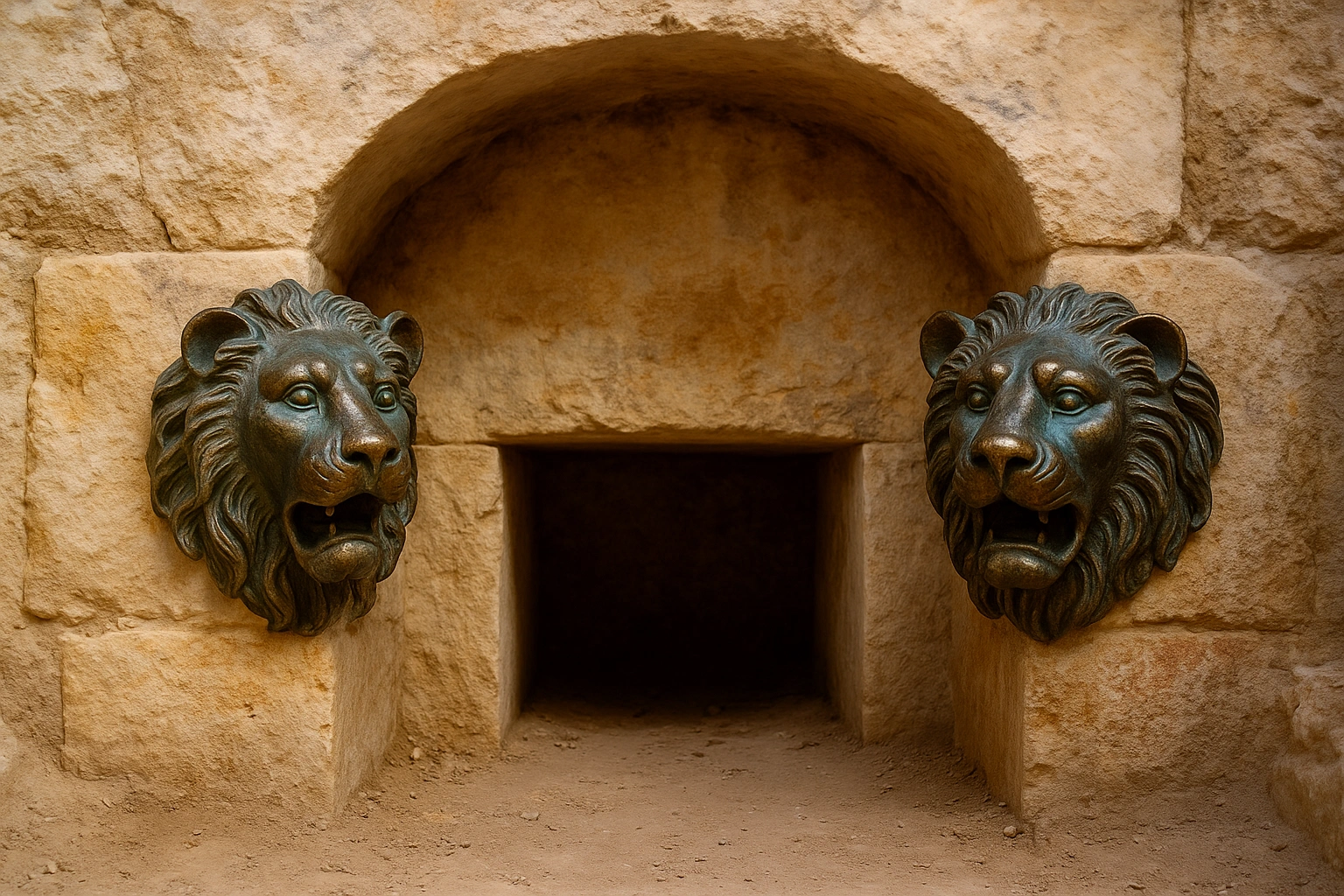
June 2025 — Tel Aviv: In a discovery that has sent ripples through the global archaeology community, Israeli archaeologists have uncovered a 1,900-year-old Roman-era tomb in central Israel—featuring a pair of enigmatic bronze lion heads unlike anything seen before in the region.
The extraordinary find, unearthed during a routine excavation near the town of Modi’in, offers a rare glimpse into the funerary practices, artistic expression, and possibly even the symbolic culture of Roman Judea. While Israel has long been known for its rich biblical and classical-era artifacts, this particular discovery stands out not only for its age and preservation but for the mystery it presents.
Were the lions guardians? Emblems of royalty? Symbols of military power? As scientists scramble to piece together the clues, the world watches in fascination.
Unearthing the Ancient Tomb: A Routine Dig Turns Extraordinary
The excavation, conducted by the Israel Antiquities Authority (IAA), was originally a standard pre-construction survey. With commercial housing planned in the region, government regulation requires that developers clear sites through archaeological review. Most such digs result in pottery shards or fragments of ancient masonry.
But this dig turned up something far more dramatic.
Key Elements Found:
-
A well-preserved limestone burial chamber, about 2 meters below the surface
-
Two bronze lion heads, approximately 25 cm tall each, flanking the tomb’s entrance
-
A variety of funerary offerings, including Roman coins, glass beads, ceramic oil lamps, and bone fragments
Lead archaeologist Dr. Yael Mizrachi-Yosef, visibly excited at the press conference, described the moment:
“When we saw the lion heads emerging from the soil, we knew immediately this was no ordinary tomb. Their craftsmanship, positioning, and symbolism hinted at an elite burial—perhaps of a military officer, a local governor, or a wealthy merchant.”
The Lions: Guardians of the Afterlife or Symbols of Power?
The bronze lion heads are what make this discovery particularly enigmatic.
What We Know So Far:
-
Each lion is rendered with open jaws, snarling expression, and detailed manes
-
Their eyes are made from inlaid glass, which still reflect light
-
Positioned facing outward, they appear to act as tomb sentinels
-
Analysis shows they were cast in one piece using the lost-wax technique, common in Roman statuary
According to Dr. Avraham Grossman, an expert in ancient Roman iconography:
“Lions in Roman art often represent strength, valor, and divine protection. They were sometimes associated with the god Mithras or the goddess Cybele, both popular in eastern Roman provinces.”
Cultural Context: Roman Judea Around 125 CE
The tomb is estimated to date to around 125 CE, during the rule of Emperor Hadrian, a period of relative calm between the Great Revolt (66–73 CE) and the Bar Kokhba Revolt (132–136 CE).
Possible Interpretations:
-
The burial may belong to a Roman military commander stationed in Judea.
-
It could also be the tomb of a local elite who adopted Roman customs and symbolism.
-
Alternatively, the lions might reflect imported influences via trade from the broader Roman Empire.
The Modi’in region, located between Jerusalem and Tel Aviv, was strategically placed and historically significant—it was the ancestral home of the Maccabees and had become a cultural melting pot under Roman rule.
The Tomb’s Layout and Offerings
Archaeologists were able to create a 3D scan of the tomb’s interior before carefully excavating the contents.
Notable Features:
-
A central burial niche, likely carved into natural bedrock
-
Walls covered in faded frescoes—now being restored—depicting floral patterns and what appears to be a Roman eagle
-
Offerings that suggest rituals performed after death, including:
-
Coins placed under the tongue (an allusion to paying Charon, the mythical ferryman)
-
Lamps with the seal of Legio X Fretensis, the Roman legion stationed in Jerusalem
-
Glass perfume bottles from Alexandria, hinting at trade connections
-
Who Was Buried Here? Theories and Clues
While the body itself was reduced to bone fragments, researchers are using forensic analysis and DNA sequencing to try and identify the individual.
Hypotheses So Far:
-
Roman Officer: Given the military insignia, the burial may have honored a high-ranking centurion or tribune.
-
Wealthy Local Merchant: The quality of offerings and imported goods could point to a Jewish or Samaritan trader assimilated into Roman culture.
-
Civic Administrator: Coins bearing Hadrian’s visage and regional civic marks could indicate someone from the provincial government.
Early Forensic Clues:
-
The bones belong to a male, roughly 40–50 years old
-
Signs of arthritis and sword-related trauma, possibly indicating a life of combat
-
Dental analysis shows Mediterranean diet with signs of imported grain and wine
Global Impact: What This Means for Archaeology
This discovery is already being compared to major finds in the region like the Caesarea Roman statue hoards and Beit She’an mosaics.
Why It’s So Important:
-
Rare example of bronze art preserved in situ in Israel
-
Adds to the understanding of Roman cultural integration in Jewish territories
-
May shed light on military and civic life in Roman Judea
-
Unusual combination of pagan symbols in a Jewish-influenced region
Dr. Judith Haber of Tel Aviv University says:
“We always assumed that Roman elite burials in Judea were confined to Jerusalem or Caesarea. This find challenges that assumption and opens up new research frontiers.”
What Happens Next? Conservation and Public Display
The bronze lion heads have been taken to the Israel Museum’s conservation lab, where they will undergo cleaning, stabilization, and further metallurgical analysis.
Upcoming Plans:
-
The full tomb is expected to be digitally reconstructed using LiDAR scans
-
A traveling exhibit, titled “Guardians of the Roman Dead,” will debut in late 2026
-
A scholarly monograph and several journal papers are already in development
There are also talks of installing a replica at the site in Modi’in, turning it into an educational archaeological park for students and tourists.
Public Fascination and Symbolism in Popular Culture
Social media has exploded with speculation and awe. Hashtags like #BronzeLions, #ModiinTomb, and #RomanIsrael are trending globally.
Art enthusiasts have compared the lions to those found in:
-
Pompeii’s garden sculptures
-
Rome’s Capitoline museums
-
Greek lion-guard tombs in Delos
Some are even theorizing a mythological significance, linking them to the Nemean lion of Hercules, although scholars caution against over-interpretation.
Read More: influencersgonewild
Conclusion: Echoes from a Forgotten Past
The 1,900-year-old tomb discovered near Modi’in is more than a stunning archaeological find. It’s a portal into a forgotten world—one where empires clashed, cultures merged, and individuals sought honor, remembrance, and meaning in death.
The bronze lion heads, with their snarling expressions and eternal gaze, are not just artifacts. They are symbols of strength, endurance, and mystery, echoing across millennia to remind us that even in stone and metal, the past still speaks.
As the dust settles and scholars dig deeper, one thing is clear: this is just the beginning of the story.
FAQs
Q1: Why are the bronze lion heads so important?
They represent a rare and well-preserved example of Roman-era bronze artwork in Israel, and their placement suggests high symbolic or ritual significance.
Q2: Who might be buried in the tomb?
Preliminary analysis points to a high-ranking Roman officer or a wealthy local adopting Roman customs—most likely from around 125 CE.
Q3: Will the tomb be open to the public?
Eventually, yes. Plans are underway to preserve the site, create a digital replica, and possibly open an archaeological park in Modi’in.
Read More: